 Guardar
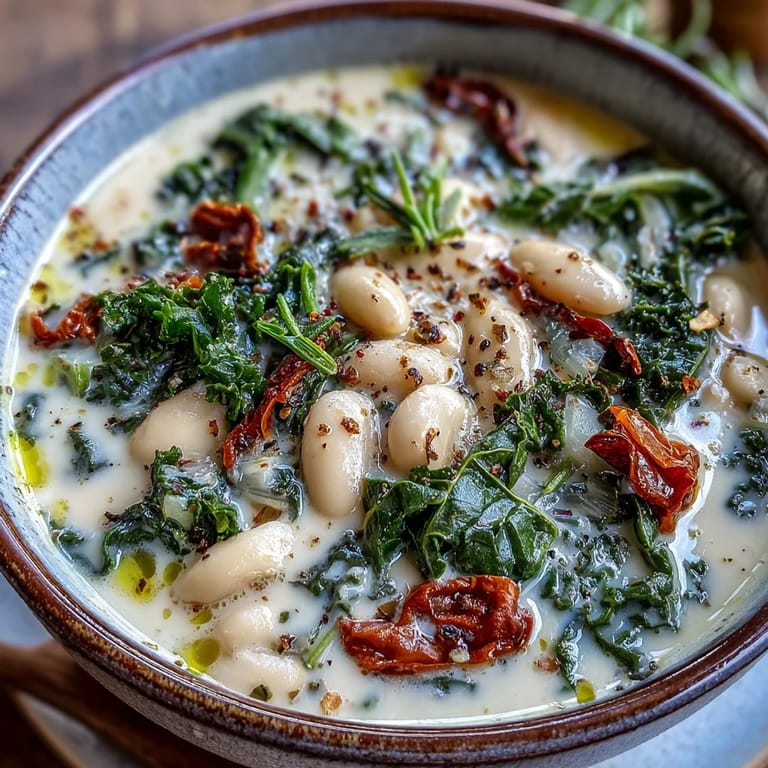
 There's something about the first cool evening of autumn that makes me crave soup, and this Tuscan white bean and kale creation has become my go-to. I discovered it while flipping through an old Italian cookbook at a farmer's market, drawn to the promise of cashew cream replacing the traditional panna cotta. The combination of silky beans, earthy kale, and sun-dried tomatoes felt like a warm hug in a bowl, and when I finally made it, my kitchen filled with garlic and herb-infused steam that had my partner asking what magical thing I was cooking.
I made this soup for my sister when she went vegan last year, worried I'd disappoint with the lack of heavy cream she loved. Instead, she took a spoonful of that cashew-garlic base and her eyes went wide—she couldn't believe it wasn't cream at all. That moment taught me that good food isn't about what you remove, it's about what you discover in its place.
Ingredients
- Olive oil: Use a good-quality extra virgin oil for the initial sauté, as it sets the flavor foundation for everything that follows.
- Yellow onion, carrots, and celery: This holy trinity is your aromatic base, so don't skip the sauté step—it transforms them from raw vegetables into something sweet and caramelized.
- Garlic: Fresh minced garlic added after the soffritto becomes fragrant and mellow, while the garlic cloves in the cream add a sharper bite that balances the richness.
- Crushed red pepper flakes: A small pinch does the heavy lifting here, waking up your palate without overwhelming the delicate flavors.
- Cannellini beans: Drain and rinse them thoroughly to remove the starchy liquid that can make the soup feel heavy instead of light.
- Vegetable broth: The quality matters more than you'd think, so choose one with a clean ingredient list and no weird aftertaste.
- Sun-dried tomatoes: Buy the kind packed in oil for deeper flavor, but if you only have dry-packed, just rehydrate them in warm water for five minutes first.
- Lacinato kale: Its tender leaves and nutty flavor are worth seeking out, though any sturdy green will do in a pinch.
- Thyme and oregano: Dried herbs here are your friends—they meld into the broth without the harshness of fresh.
- Raw cashews: The soaking is non-negotiable if you want that silky texture, so plan ahead or use boiling water to speed things up.
- Lemon juice: A small amount brightens the cream without making it taste overtly lemony.
- Nutritional yeast: Optional, but if you want that umami depth that mimics a cheesy flavor, it's worth the pantry space.
Tired of Takeout? 🥡
Get 10 meals you can make faster than delivery arrives. Seriously.
One email. No spam. Unsubscribe anytime.
Instructions
- Make the cream first:
- Blend your soaked cashews with water, garlic, lemon juice, nutritional yeast, and salt until it's completely smooth and pourable—you're looking for the texture of heavy cream. This becomes the soul of the soup, so don't rush it.
- Build your flavor base:
- Heat olive oil in a large pot and let your onion, carrot, and celery have a proper sauté for five to six minutes until they're soft and starting to turn golden. Listen for that gentle sizzle and you'll know things are happening.
- Wake up the garlic:
- Add your minced garlic and red pepper flakes for just one minute—the moment you smell that pungent garlic aroma, you know it's done. Timing matters here because overcooked garlic turns bitter and ruins the whole moment.
- Bring in the beans and tomatoes:
- Stir in your rinsed cannellini beans, sliced sun-dried tomatoes, thyme, oregano, salt, and pepper, mixing everything to coat in that fragrant oil. The sun-dried tomatoes will start to soften and release their concentrated sweetness into the pot.
- Simmer the broth:
- Pour in your vegetable broth, bring it to a boil, then dial it down to a gentle simmer for fifteen minutes. You'll watch the flavors meld and deepen as the beans absorb the herbed broth.
- Add the kale:
- Stir in your chopped lacinato kale and let it simmer for five to seven minutes until it transforms from sturdy to tender. The kale will darken and become silky, absorbing all that savory broth.
- Finish with cream:
- Pour in that cashew cream and stir gently, then let it warm through for just two minutes—you're not cooking it, just bringing it to temperature. Taste and adjust your salt and pepper because this is when you tune the flavor to exactly what your palate wants.
 Guardar
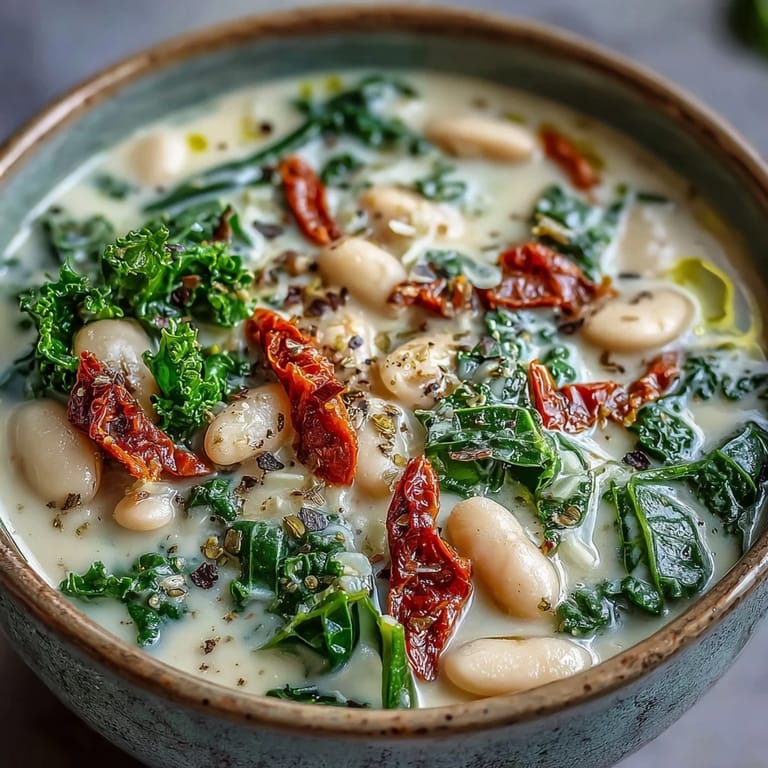
 The best version of this soup happened on a rainy Tuesday when I had exactly zero sun-dried tomatoes in my pantry, so I roasted some fresh tomatoes with a bit of olive oil and salt instead. They caramelized into something even more beautiful than the traditional ingredient, turning an obstacle into a moment of kitchen creativity that I still think about. That's when I learned that recipes are really just guidelines, and the real magic happens when you trust your instincts.
The Secret of the Cashew Cream
I used to be intimidated by making cashew cream, thinking I'd mess up the ratios and end up with either soup or paste. Then I realized the ratio is forgiving—it's all about how much water you add at the end, so you can adjust it to your preference. Start with three-quarters cup of water and if it's too thick, add a splash more while blending until you reach that perfect pourable consistency that feels luxurious on your tongue.
Building Better Flavor Layers
This soup teaches you something important about cooking: the order in which you add ingredients matters because each step builds on the last. The sauté creates a caramelized base, the garlic bloom adds depth, the beans and broth create body, and finally the kale and cream finish with texture and richness. It's like a conversation where each person gets to speak in turn.
Making It Your Own
Once you've made this soup once, you'll start seeing variations everywhere. Some nights I add a splash of unsweetened plant-based milk to the cream for extra richness, or swap the kale for spinach when I'm craving something milder. The foundation is solid enough to support your own ideas, so play with it.
- A crusty slice of bread beside the bowl transforms the whole experience into something more substantial and satisfying.
- A drizzle of good olive oil and fresh cracked pepper on top gives you a moment of flavor and texture contrast with each spoonful.
- Leftover soup keeps beautifully in the fridge for four days, and the flavors actually deepen as it sits, making it perfect for meal prep.
 Guardar
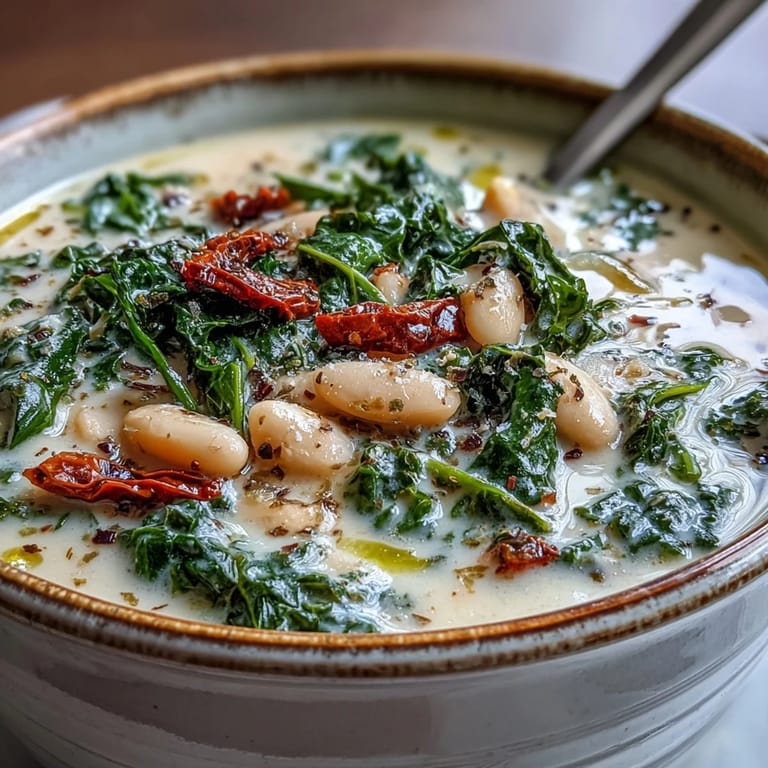
 This soup has become one of those recipes I make without thinking, the kind you reach for when you want something that feels like home. Every bowl reminds me that the best food is the kind that brings people together, whether it's vegan or not, simple or fancy—it just has to taste like it was made with intention.
Preguntas frecuentes sobre recetas
- → ¿Puedo usar otro tipo de hojas verdes en lugar de kale?
Sí, el espinaca baby es un buen sustituto que aporta un sabor suave y textura ligeramente diferente, manteniendo la frescura del plato.
- → ¿Cómo preparo la crema de anacardo para la sopa?
Remoja anacardos crudos en agua caliente durante 20 minutos, luego licúa con ajo, jugo de limón, sal y agua hasta obtener una textura cremosa y uniforme.
- → ¿Qué aceituna es recomendada para el sofrito inicial?
El aceite de oliva virgen extra es ideal para sofreír las verduras, aportando un sabor auténtico y ligero mediterráneo.
- → ¿Es necesario añadir copos de chile rojo?
Los copos de chile son opcionales y aportan un toque picante que puede intensificar el sabor según preferencia.
- → ¿Cómo conservar mejor los tomates secos antes de usarlos?
Los tomates secos en aceite deben almacenarse en un lugar fresco y seco, o en refrigeración tras abrir para preservar su sabor y textura.
- → ¿Qué tipo de caldo vegetal es mejor para esta sopa?
Un caldo vegetal casero o de calidad comercial, bajo en sodio, realzará el sabor natural de los ingredientes sin dominar la mezcla.