 Guardar
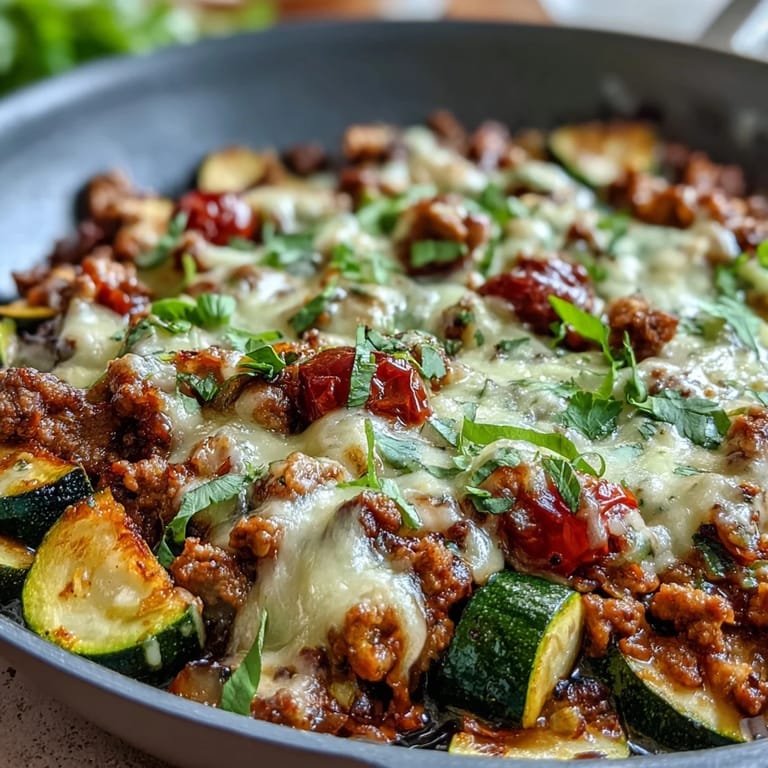
 Last summer, I was standing in my kitchen on one of those evenings where everything felt rushed—work running late, groceries still needing to be put away, and four hungry people arriving in thirty minutes. My eye landed on a bunch of zucchini that was starting to look a little tired, and somehow I remembered a taco night from years ago that had nothing to do with zucchini but everything to do with that feeling of throwing something together and having it turn out exactly right. This skillet dish was born from that moment of creative desperation, and it became the dinner I make now whenever I want something that tastes like real food without the real fuss.
I made this for my neighbor one evening when she brought over her daughter, both of them looking absolutely exhausted from a long week. I watched her face the moment she took that first bite—something shifted, like she'd remembered that food doesn't have to be complicated to be comforting. She asked for the recipe before she'd even finished eating, and now she texts me photos of her own versions. That's when I knew this dish had become something bigger than just dinner.
Ingredients
- Ground turkey, 1 lb: Lean and quick-cooking, it takes on the taco spices without drowning them out—look for meat that's bright pink and doesn't have too much liquid pooling underneath.
- Medium zucchini, 2 whole: Dice them into half-inch pieces so they cook through but don't disappear; larger pieces hold their texture better than you'd expect.
- Red bell pepper, 1: The sweetness cuts through the spice in the best way, and the color makes the whole skillet look alive.
- Small red onion, 1: Finely chopped means it dissolves into the dish and flavors everything; don't skip this step.
- Garlic, 2 cloves: Minced fresh garlic blooms immediately when it hits hot oil, filling your kitchen with that smell that makes everyone suddenly interested in dinner.
- Cherry tomatoes, 1 cup: Halved so they burst and release their juice into the pan, creating a light sauce that ties everything together.
- Jalapeño, 1 (optional): Seeds removed unless you love serious heat; this ingredient is entirely about your mood.
- Chili powder, 2 tsp: The backbone of the flavor—get the good stuff if you can, because it actually tastes different.
- Ground cumin, 1 tsp: Warmth and earthiness that makes people ask what's in this dish.
- Smoked paprika, 1 tsp: Adds complexity without being obvious about it.
- Dried oregano, salt, black pepper, and red pepper flakes: The seasoning architecture that brings everything into focus.
- Low-sodium chicken broth, 1/2 cup: Just enough liquid to create a light sauce that gets absorbed into the vegetables.
- Reduced-fat cheddar cheese, 1/2 cup shredded: Melted at the end so it coats everything without making the dish feel heavy.
- Fresh cilantro, 2 tbsp chopped: The final note that says this is intentional, not accidental.
- Lime juice, from 1 lime: Brightness that wakes up your palate and makes you want another bite.
- Olive oil, 1 tbsp: Just enough to get everything moving without excess oil pooling at the bottom.
Tired of Takeout? 🥡
Get 10 meals you can make faster than delivery arrives. Seriously.
One email. No spam. Unsubscribe anytime.
Instructions
- Start with the softer vegetables:
- Heat your oil over medium heat and add the diced onion first, letting it soften for a couple of minutes until it becomes translucent and sweet. This is the foundation everything else builds on, so don't rush it.
- Build the garlic moment:
- Add your minced garlic and let it toast for just thirty seconds until your whole kitchen smells like possibilities. That's your signal it's doing what it should be doing.
- Brown the turkey properly:
- Add the ground turkey and use a wooden spoon to break it into small pieces as it cooks, letting it get golden brown and cooked through over four to five minutes. This step isn't just about food safety; it's about texture and flavor development.
- Introduce the summer vegetables:
- Once the turkey is cooked, add your bell pepper, zucchini, and jalapeño if you're using it, stirring everything together and letting the vegetables start softening for three to four minutes. You want them still holding their shape but tender enough that a fork goes through easily.
- Make it a taco skillet:
- Sprinkle in all your spices at once—chili powder, cumin, paprika, oregano, salt, pepper, and red pepper flakes if you're feeling brave—and stir for a full minute so every piece gets coated. The smell will tell you when it's ready to move forward.
- Create the sauce:
- Add your halved cherry tomatoes and chicken broth, stirring everything together and bringing it to a gentle simmer. Let it bubble away uncovered for five to seven minutes until most of the liquid has been absorbed and the zucchini is tender.
- Melt the cheese through:
- Remove from heat, sprinkle cheese evenly over the top, cover the skillet for a minute or two, and let the residual heat do the melting work. This method keeps the cheese from breaking down into a separated mess.
- Finish with brightness:
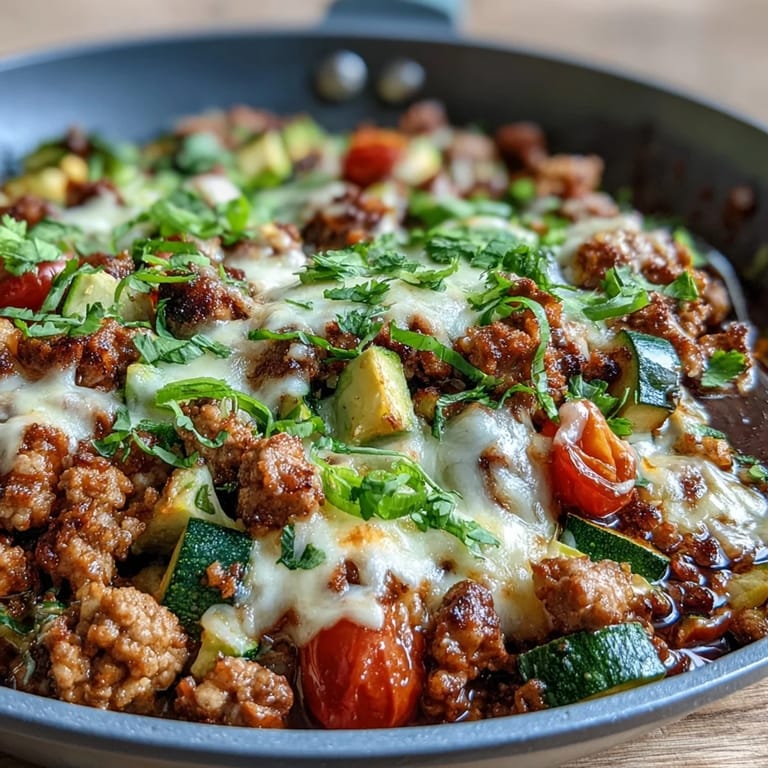
- Uncover, scatter fresh cilantro across the top, squeeze lime juice over everything, and serve hot straight from the skillet. These final additions are what separate this from just another ground turkey dish.
 Guardar
 My daughter, who is usually skeptical about anything remotely healthy-sounding, asked for seconds and thirds of this skillet. She wanted to know if she could help me make it next time, and suddenly we were talking about meal prep and what vegetables she actually likes, conversations I didn't expect to have over a taco-spiced zucchini dinner. Food has a way of opening doors you didn't know were closed.
Why This Works as a Summer Dinner
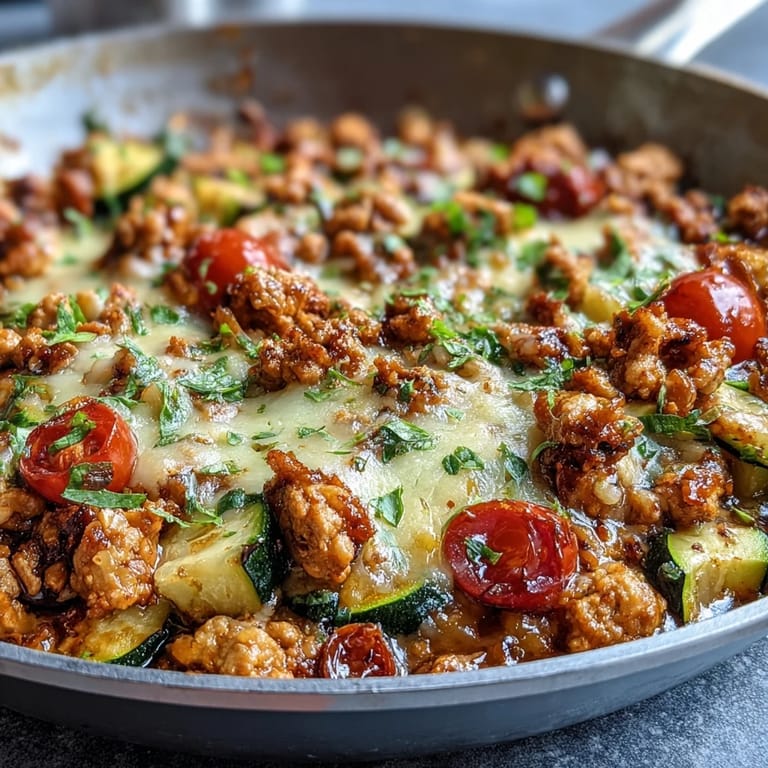
Summer cooking should feel light but substantial, and this skillet hits that balance perfectly. The zucchini cooks down just enough to be tender without becoming waterlogged, the cherry tomatoes burst into a light sauce, and the taco spices make everything taste intentional. There's no heavy cream or complicated technique—just fresh vegetables and quality seasoning doing what they do best. You finish eating and don't feel like you need a nap, but you also feel genuinely satisfied.
The Cheese Question
I use reduced-fat cheddar because it melts smoothly and tastes like actual cheese, not like a dietary compromise. But I've also made this with Monterey Jack, which adds a subtle creaminess, and with no cheese at all for friends who are avoiding dairy. The dish works in all these iterations, though something about the melted cheese hitting that lime juice creates a moment that feels complete. If you're going dairy-free, a cashew cream or nutritional yeast can add richness, but honestly, sometimes letting the vegetables and spices carry the dish is the better choice.
What Makes This Easy and Why That Matters
Easy recipes aren't just about time or ingredient count—they're about not needing to think too hard while you're cooking. This skillet doesn't require any special technique, no resting period, no multiple stages of complex flavor building. Everything goes into one pan in a logical order, and if you follow the timing, it works every single time. I've made this on nights when I was exhausted and nights when I was energized, and the result has been consistently good. That reliability is what transforms a recipe into something you actually want to make again.
- Prep your vegetables before you turn on the heat: Having everything diced and ready means you're never scrambling for the next ingredient.
- Taste as you season: Everyone's tolerance for salt and spice is different, so adjust the seasoning to what works for your palate.
- Keep the heat at medium: Too high and your turkey will brown too fast on the outside before cooking through, too low and everything takes forever.
 Guardar
 This skillet has become my go-to recipe for nights when I want to feed people well without feeding my stress. It's the kind of dish that makes you look like you've got everything figured out, even on days when you absolutely don't.
Preguntas frecuentes sobre recetas
- → ¿Cómo puedo adaptar el platillo para una dieta vegana?
Para una opción vegana, reemplaza el pavo por una proteína vegetal como tofu o seitán y utiliza queso vegano o evita el queso por completo.
- → ¿Qué técnicas uso para que las verduras queden al dente?
Cocina las verduras a fuego medio durante poco tiempo hasta que estén tiernas pero firmes, evitando que se cocinen demasiado para conservar textura.
- → ¿Se puede usar otro tipo de carne en la preparación?
Sí, el platillo admite pollo molido o incluso mezclas de carne molida si se prefiere, manteniendo tiempos similares de cocción.
- → ¿Qué otros acompañamientos combinan bien con este salteado?
Se puede servir con arroz de coliflor, una ensalada fresca o aguacate en rodajas para complementar el plato sin añadir carbohidratos pesados.
- → ¿Es posible preparar esta receta sin lácteos?
Sí, simplemente omite el queso o usa una alternativa vegana para mantener el perfil lácteo libre.
- → ¿Qué especias son esenciales para el sabor característico?
El chile en polvo, comino, paprika ahumada y orégano son claves para lograr el perfil tradicional y aromático del platillo.