 Guardar
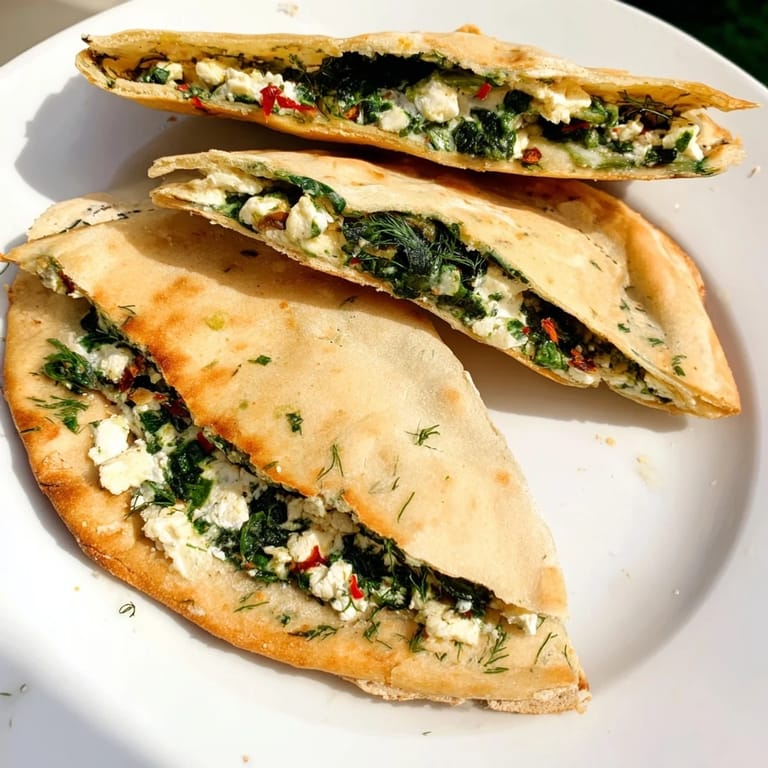
 There's something about the smell of spinach wilting in olive oil that transported me straight back to a small kitchen in Istanbul, even though I'd never been there. A friend's grandmother had shared this recipe during a random conversation at a market, and I was captivated by how something so simple—just dough, greens, and cheese—could taste so impossibly good. The first time I made these flatbreads, I burned the edges because I got distracted telling my roommate about the story, but somehow that made them even better, crackling and nutty in all the right places.
I made a batch of these for a small dinner party once, and my usually quiet friend who barely touches vegetables ate three of them without stopping. She asked for the recipe with her mouth half full, which felt like the highest compliment. That night, I realized these flatbreads had a way of making people forget they were eating something healthy.
Ingredients
- All-purpose flour: The foundation of your dough—nothing fancy needed, just reliable and forgiving.
- Warm water: Not hot, not cold, because temperature actually matters when you're waking up gluten.
- Olive oil: Both in the dough and for cooking; it's what makes everything taste like it belongs on a Mediterranean table.
- Fresh spinach: The real star here—wilted down, it loses that raw earthiness and becomes something almost sweet and tender.
- Feta cheese: Crumbled feta brings that salty, tangy contrast that keeps your palate interested with every bite.
- Fresh dill and parsley: These aren't decoration; they're what separate a good flatbread from one that tastes like pure nostalgia.
- Onion and garlic: Sautéed until soft, they mellow into a gentle backbone that holds everything together.
- Red pepper flakes: Optional, but they whisper a little heat that nobody can quite identify, which I love.
Tired of Takeout? 🥡
Get 10 meals you can make faster than delivery arrives. Seriously.
One email. No spam. Unsubscribe anytime.
Instructions
- Make your dough:
- Mix flour and salt, then add olive oil and warm water, kneading for about 5 or 6 minutes until the dough feels smooth and alive under your hands. Let it rest covered for 20 minutes while you handle the filling.
- Cook the filling:
- Heat olive oil in a skillet, soften the onion first, then add garlic and spinach until the spinach collapses and releases all its moisture, which should take about 6 or 7 minutes total. Spread it on a plate to cool while you work on everything else.
- Mix the filling:
- Combine the cooled spinach with feta, fresh herbs, pepper, and red pepper flakes if you're using it, tasting as you go because this is your moment to adjust the seasoning.
- Shape and fill:
- Divide the dough into 4 pieces, roll each into a thin oval, then place filling on one half and fold to create a half-moon, pressing the edges tight so nothing escapes during cooking.
- Pan-bake until golden:
- Cook each flatbread in a dry skillet over medium heat for 3 or 4 minutes per side, listening for that gentle sizzle that tells you the outside is turning crispy and golden brown.
 Guardar
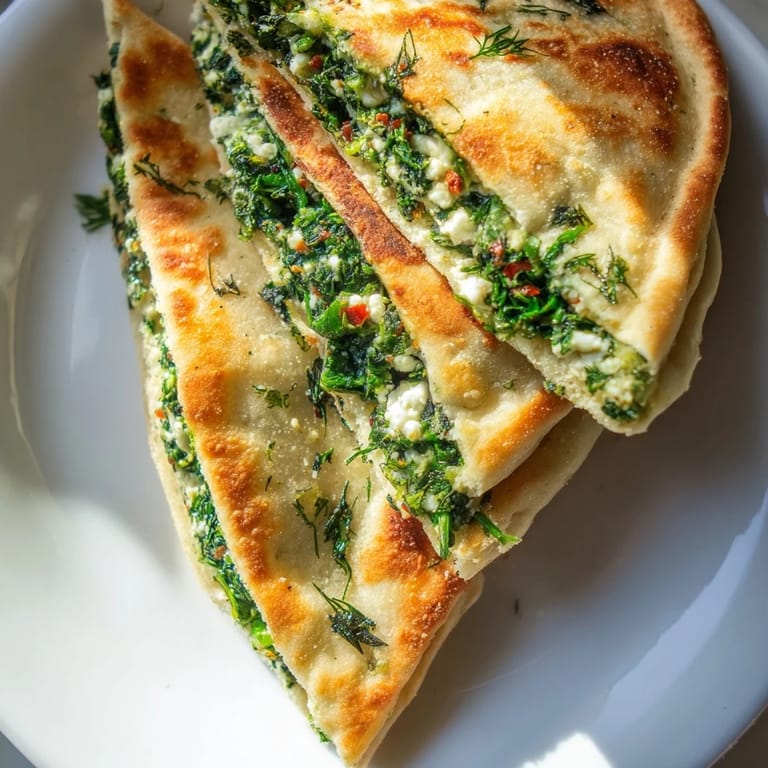
 The moment these flatbreads came off the skillet still steaming, my partner broke one open and the steam rose between us like this small, edible cloud. We sat at the kitchen counter, no plates, just the warm food in our hands, and everything else felt less important than that one perfect bite.
The Spinach Question
Fresh spinach seems intimidating because it's so voluminous until it hits heat, then it transforms into something almost unrecognizable—dense, concentrated, almost sweet. Frozen spinach works beautifully too if that's what you have; just make sure you squeeze out every bit of water or your filling becomes heavy and damp. Baby spinach wilts faster and leaves less liquid behind, which I've learned makes the whole process feel less stressful and more flowing.
The Dough Ritual
There's something meditative about kneading this dough, the way it gradually stops fighting you and becomes smooth and supple under your hands. Some days I knead by hand because I want that moment; other days I use a mixer because I'm tired and that's okay too. The important part is that resting period—it's not just time passing, it's actually changing the dough at a molecular level, making it cooperate when you roll it thin.
Serving and Storage
These flatbreads are best eaten warm, straight from the skillet, when they still have that edge-of-crispy texture that softens as they cool. You can make the filling ahead of time, which honestly cuts the whole process in half when friends are coming over. If you have leftovers, reheat them gently in a skillet for 30 seconds per side to bring back that warmth without drying them out.
- Serve them with cool yogurt or a bright tomato salad to cut through the richness.
- You can brush the finished flatbreads with melted butter or a drizzle of good olive oil if you want an extra layer of flavor.
- Store leftovers in an airtight container for up to two days, though they're rarely around that long.
 Guardar
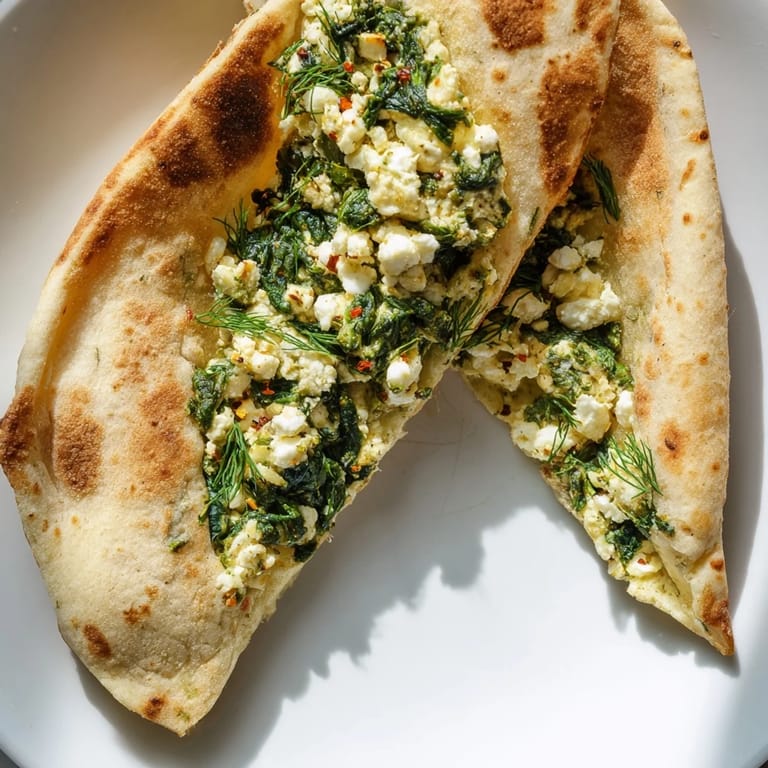
 These flatbreads have a way of making an ordinary Tuesday feel special, or turning a simple meal into something people remember. There's something honest about food that's this straightforward, cooked with nothing but a skillet and your attention.
Preguntas frecuentes sobre recetas
- → ¿Cómo se prepara la masa para las tortas?
Se combina harina con sal, aceite de oliva y agua tibia, mezclando hasta obtener una masa suave y elástica que se deja reposar antes de usar.
- → ¿Qué ingredientes forman el relleno principal?
El relleno incluye espinaca fresca salteada con cebolla y ajo, mezclada con queso feta desmenuzado, eneldo, perejil y especias.
- → ¿Cuál es la mejor forma de cocinar estas tortas?
Se cocinan en una sartén antiadherente a fuego medio, volteándolas para que queden doradas y bien cocidas por ambos lados.
- → ¿Se pueden usar espinacas congeladas en lugar de frescas?
Sí, las espinacas congeladas pueden usarse, siempre que se descongelen y escurran bien para evitar exceso de humedad.
- → ¿Con qué acompañar estas tortas para realzar su sabor?
Se pueden servir con yogur natural o una ensalada fresca de tomate para equilibrar sabores y aportar frescura.
- → ¿Se puede añadir algún toque extra para un sabor más intenso?
Una pincelada de mantequilla derretida o aceite de oliva sobre las tortas recién cocidas añade un aroma y sabor deliciosos.